
What kinds of things did you like at Nysmith?
I was fairly heavily into math and science while I was there (actually, I think I was in the group that piloted the… let’s call it the “advanced math track”, since it didn’t actually have a name, but there were a few of us who ended up doing pre-algebra in 4th grade and kept going at that pace afterwards). So I definitely recall doing Math Club and later MathCounts – I think I was actually team captain at competition the final year, even though I’m not sure I deserved it! – and I believe there was a Science Club that Mrs. Carlivatti ran as well. And I definitely did Poetry Club for several years. Beyond that, the father of one of my classmates was a major with the Australian Army assigned to the Pentagon, so he ran a fun table-top game club for a year or two.
What did you do after Nysmith?
After Nysmith I went to TJ, which was both a great experience and one of the tougher things I’ve done in my life. (The workload junior year and the first half of senior year, quite honestly, was tougher than anything I faced in my first couple years of college.) I think I dabbled in a few extracurriculars when I started out, but by the time I discovered rowing I started to go pretty all-in on that – it’s a sport where you can put in a lot of time if you really want to improve yourself, and that’s what I ended up doing. Between that and managing my academics, I had more than enough to keep me busy! I volunteered in registration at Reston Hospital one summer, and did some research senior year of high school for our mandatory tech lab project, but I really didn’t have a ton of time outside of study and sport.
By senior year I had pretty strong grades and test scores, and I was (just barely) a good enough rower to get recruited to Princeton. The story there is honestly pretty similar… I focused on science and majored in Molecular Biology (including a senior thesis on malaria), and spent most of the rest of my time rowing. Honestly – and this is not to say that I sacrificed my academics – if you wanted to claim that I majored in rowing, I probably wouldn’t disagree.
Talk about your exciting rowing career after high school and training for the Olympics!
Honestly, I can’t really remember what pushed me to try it in the first place, though I knew a couple older kids who liked it and my neighbor down the street had rowed in high school and college. Either way, I went out for it freshman year… as did 50 other freshman and sophomore boys, which was literally the largest turnout the team had ever had. I was… not good at the start. (As a freshman, I clawed my way onto the whopping 6th varsity boat) But it awakened something in me that realized that if you worked really hard, and put in a LOT of time with it, you could make serious improvements. So I jumped up to the 3rd boat as a sophomore, the 2nd boat as a junior, and then senior year I made the varsity eight by the skin of my teeth. (This is probably exaggerated by recollection, but I could swear that the coach swapped me in and out of the top boat every day for a month straight before he finally decided to keep me in there.) And I was lucky that the other guys were a lot stronger than me, so I got to ride with them to a national championship and a trip overseas to compete at the Henley Regatta in England.
To make a long story short, rowing in college was similar except that it took less time to go from being awful to being decent. Freshman year I struggled a lot at the boathouse (which, in retrospect, was because I was dealing with a shoulder problem and nobody realized it); that summer, I spent every day on the rowing machine in my parents’ basement to whip myself into shape, and when we all came back I ended up posting the third fastest score on the team (to the great surprise of the head coach). So I made the top boat, and we had a very special couple years… as a sophomore we won literally everything, were national champions, and this time went back to Henley and actually won it. We graduated a lot of really good guys, so the boat during junior year was a lot scrappier and we had to work a lot harder, but we still ended up national champions (which was honestly even more satisfying given how much harder we had to work for it).
I really loved rowing and was pretty decent at it, so while I was in college I got in touch with the national team coaches to see if I could take it a step further. I made the Under-23 team in 2010 and made the finals in the lightweight pair at the U23 World Championships in Belarus (very much a product of the Eastern Bloc, and therefore an interesting – and inexpensive – place to visit), and in 2011 rowed in the lightweight eight at the Senior World Championships in Bled, Slovenia (a BEAUTIFUL place to visit – home of Josip Tito’s vacation palace, believe it or not). I’d been considering my options at this stage – I wanted to be a doctor, but I knew I had enough skill at rowing to have an opportunity to compete at the highest level – and things really fell into place when one of the older rowers told me, “You can be a doctor for the rest of your life, but you’ll only have one chance to row at the Olympics.” And that settled it – after college I packed up my things and moved to Oklahoma City, where the Olympic Training Center was for lightweight rowers, and spent the next two years there training full-time (plus another year training at Potomac Boat Club in DC).
Full-time training for rowing is… interesting. It’s certainly satisfying, but you’re basically putting your body through the wringer every week with minimal rest – we would usually train twice, occasionally three times, per day, and between the normal training hours and the physical therapy I did to stave off further injury, I usually spent 5-6 hours at the boathouse per day. Many of those training sessions were also designed to absolutely push your body to the limits, to the point where you couldn’t go further even if you wanted to, which was taxing both physically (for obvious reasons) and mentally (because you knew that you’d really have to push yourself through pain, and that you’d have to do it again a couple days later). When I wasn’t training, I was trying to rest (at least 8 hours of sleep per night, plus naps during the day to keep my strength up) or eat enough to refuel for the next session – I’d say we burned 3000-4000 calories per day with our workouts – which left little time for me to do much else during the day, other than the occasional part-time job to help make ends meet.
Personally, I’m very glad that I went after that opportunity, but I’m also glad that it’s over now – especially since I wasn’t quite able to make the team. (The Olympic team, at the time, had only 6 spots available for lightweight men, so if you weren’t one of the 6 fastest guys in the entire country then you were out of luck. I admittedly wasn’t too far away, but even if I hadn’t been forced into early retirement by injury I’m not sure I would have made the cut.) Like I said, it takes a serious toll on your body, especially if you’re also trying to remain a lightweight – less body mass, and fewer calories per day, means you’re much more prone to injury, and I usually had at least one major issue crop up per year. That’s also why I had to stop before I could try for the Rio Olympics – in 2014, my shoulder started really hurting during a row, and it turned out that I’d done so many miles over the years that the cartilage had just worn out and gotten torn, meaning I needed surgical repair at 25 years old. I do wonder what would have happened if I’d done a couple things differently – maybe headed off that injury and been in contention for the team in 2016 – but I found that I was much happier when I had time for things other than rowing, and when I could eat as much as I wanted without worrying about having to weigh in at 154 pounds, so I think it was probably for the best that I stopped when I did.
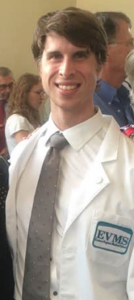
Medical School Student, Eastern Virginia Medical School in Norfolk
How did you get into the medical field and your decision to get your MD, and your medical school experience? Can you tell us about your various jobs and the area of research you’re trying to decide between?
Much like rowing, I can’t really point to any one moment where I decided I wanted to be a doctor, but I know I’d been heading that way for a long time. I liked science, and in particular I pursued biology for a very long time. I think that through high school and early college I had it in my head that I might like medicine, and that idea really cemented itself when I did my independent research for my undergraduate degree… I liked the science, but I would much rather spend my life using that to interact with and help people than sitting at a bench working with petri dishes (my senior thesis involved bench research with malaria, and ended up making my life fairly miserable). The other thing that was bubbling under the surface this entire time was the idea of… let’s call it a “legacy”, for lack of a better word. I’ve always been driven by the knowledge that we only get so long on this earth, and that we should try our hardest to leave something behind to show who we were and what we were capable of – that we should try to make a difference somehow, somewhere. It’s hard to beat the medical field in terms of making a difference, since usually you’re literally saving people’s lives, so when that combined with my scientific bent things just fell into place.
Getting into medical school is notoriously difficult nowadays, even more than most people realize – having good grades and test scores, which I did, are not remotely sufficient, and even though I’d had impressive accomplishments with rowing, I wasn’t going to get in anywhere without volunteering or clinical experience to demonstrate an interest in, and aptitude for, the field. As I indicated above, my main focus after college was rowing, and my first two years of training basically didn’t afford much time for anything else (particularly since Oklahoma City had fewer opportunities to offer than other locations).
However, when I moved to the DC area to row on the Potomac, I made it a point to bulk up my clinical experience in preparation for the application cycle. I applied to be a medical scribe at Reston Hospital via the ScribeAmerica company, and with a little luck – my parents happened to have met one of the ER doctors on vacation out west, believe it or not – I got the job. For reference, scribes are technically involved in documenting the patient stay and writing the physician’s chart, but that underplays how difficult the job is. I prefer comparing it to an embedded reporter during wartime – there’s a ton of very serious stuff going on around you, and you need to keep your head and record it appropriately and accurately. I highly recommend it for anyone looking for medical experience: you’ll see a lot of very interesting things, make some good connections, and learn a lot about the practice of medicine while you’re doing it. I spent the next year as a medical scribe in the Reston Emergency Department, and after that was promoted to Chief Scribe for the next year.
Through this I did the standard “apply to more than 20 medical schools just to be safe” procedure, and ended up heading to Eastern Virginia Medical School in Norfolk. I always feel a little guilty saying this, but I actually hadn’t even heard of the school before I started the application process, but I am SO happy that I ended up here – the teachers and curriculum are good, but what really sells it for me are the other students. It’s an extremely collaborative environment – every student genuinely wants everyone else to do well, and there’s none of the cutthroat behavior that you occasionally hear mentioned in other programs. So instead of unhealthy competition, you have people writing up and posting study guides online, sharing helpful YouTube videos that explain difficult concepts, or just offering moral support to anyone who needs it. It’s a fantastic way to help get through medical school, which on its own is a pretty rigorous and taxing experience.
I’m currently in my 2nd year, and over this past summer, I did research into pediatric hematology/oncology at the Children’s Hospital of the King’s Daughters here in Norfolk. My particular project looked at symptoms and quality of life in children with cancer, as well as the effect that has on their parents. It’s very interesting material – a little bit bleak at times, but when you see the drive these pediatricians have to help these kids battling a terrible disease, and how often they’re actually successful, it becomes very uplifting and inspiring. I’m not sure I could do what they do, but I’m glad there are people like them in the world who can handle it. I’m still undecided about how much research I’ll pursue in the future, and what type – research is an important part of getting into a good residency program after school ends, and I’ve very much enjoyed this project, but my main goal is still becoming a skilled clinician and focusing on treating people who need help. Likewise, I haven’t decided yet what field I’m most interested in – most students make up their mind during 3rd year, when they actually do their clinical rotations and get to experience everything – but I’m leaning towards either orthopedics or a specialty in internal medicine (cardiology and oncology top the list right now).
What happened in Paris last summer?!
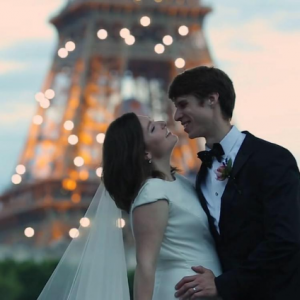
That week in Paris (plus the week we spent in Italy and England afterwards) is quite possibly the best of my life. Sarah and I met while I was training in Oklahoma City – she was working in Hollywood at the time but was back in town to visit family for Christmas, and I was just about to fly back to Virginia to see my family, but we happened to run into each other during the narrow window of time when we were both in OKC and just hit it off. Fast forward a couple years to our engagement and wedding planning. The original plan had been to do something in DC, but the preparations became so complicated and stressful that I suggested we just start over, go overseas, and do something special with our closest family and friends – something small, fun, and memorable, instead of trying to invite 200 people and please all of them at the expense of our own experience. We’d always talked about Paris – Sarah had been once before and loved it, and I’d always wanted to see it (having studied many, many years of French at Nysmith and in high school) – so the decision was easy from there.
We flew out to Paris one week before the ceremony. (Technically, we were already legally married at the time – neither of us are French citizens, so we’d needed to perform a civil ceremony in the US beforehand – but we still consider the ceremony in Paris to be the main event.) We spent some time getting things set up, but a lot of time was just… enjoying life, together and with the friends who joined us. I remember going for early morning runs beneath the Eiffel Tower, trying a different street side cafe each day, walking through the Louvre and La Musee de L’Armee, and of course an appropriate amount of wine and champagne (we were in France, after all!). And on June 22, we got married on a roof top a mile away from the Eiffel Tower, and it was just… special, the whole thing. It’s probably a bit cliché when talking about Paris, but I think the word “magical” is appropriate.
The next week was our honeymoon, which consisted of a week in Italy – Lake Orta, which is a BEAUTIFUL location that isn’t swamped with tourists – and then in England, spectating at the Henley Royal Regatta. Yes, I was admittedly motivated by my past in rowing and the opportunity to see the world’s best crews up close and personal, but it’s also a huge social outing on the English calendar, and people come from all over the country to dress up in fancy clothes and watch people messing around in boats. We also got to explore a few hidden alleys in London and take an overnight train through the European countryside. It ended far too quickly… as soon as we have the time and money, we absolutely plan to go back and do it all again.

How did going to Nysmith impact your life?
I’d say that going to Nysmith gave me opportunities that I never would have found elsewhere, which in turn opened doors to new places. I’d be remiss here if I didn’t mention Lisa Guerro, my math teacher all the way back in 1st and 3rd grade who just retired this year – there was a group of about half a dozen of us who were gifted in mathematics, and when it became apparent that we were moving faster than the curriculum, she fought for us to stay on that advanced track even though it hadn’t been done before. It sounds like a small thing now, but her faith in us – and the school’s willingness to go along with it – literally changed the trajectory of my life, because that advanced track allowed all of us to tackle bigger academic challenges than we would have otherwise, which in turn set us up to attend the best high schools and colleges, and then everything just opened up from there. All the things I’ve done – rowing at Princeton, meeting my future wife, studying medicine and doing research to help children with cancer – I can trace it all back to Nysmith taking that chance on us six kids. Of course, the education was excellent all around, but I think stories like this really illustrate what set the school apart in those days.
As for what it taught me… well, certainly, I learned that a willingness to work hard will pay off. But also, in retrospect, I learned that it takes a little luck sometimes – being in the right place and the right time – and that you have to appreciate those circumstances when they come. Yes, admittedly, this lesson did stem from the academics… but with some age and maturity it’s easy to see how it applies to everything else in life too.
What advice (if any) would you give to a current Nysmith student and/or parent?
Students: look for opportunities presented to you, and go after them! You’re at a stage of your life where you can still decide to do or be whatever you want to, and it’s up to you to figure out what that is. Try new things, see what grabs your interest, and don’t say no to something until you’ve given it a shot – you never know when you’ll stumble on something incredible.
Also, this is less advice and more wisdom (as much as anyone still in their 20’s can call themselves “wise”): never take those opportunities for granted. Be grateful for where you are and the people around you, because there are so many people out there who don’t have those things and never will.
Parents: encourage your kids to try hard and do well, but please be careful not to push them too far. If they want to try and accomplish great things, that’s wonderful – but it has to be their choice. If they’re pushed into something they’re not really passionate about, then they either won’t succeed in it in the first place, or they’ll simply burn out later. But if it’s something they choose on their own, there’s no telling what they can do.
FAVORITES:
Field Trip: I might have to say Jamestown in 1st grade, just because it was the first time I’d gotten to do something like that as a student – leaving school for something really far away (to my 7 year-old mind, at least), and it being the oldest colony in the United States to boot.
School Play: School play… I remember enjoying “The Phantom of the Music Room” in 3rd or 4th grade, probably because I got to play the principal. (TJ Loeffler was actually the lead in that, playing Deputy Barney.)
Place to Hang out at Nysmith: Not sure if it’s still there, but the black top where we had recess during lunch time. 2-square was one of my favorite games (which graduated to 4-square once I got to college), so that was a great go-to spot during our off time.
Book that you read for one of your classes: Oof, this is a tough one, largely because I can barely remember what I read for school and what I’ve since read on my own. I do distinctly remember, though, that my introduction to Harry Potter came from Mrs. Wilcox reading a few pages to us each day in the 4th grade, so I have to give a shout out to her for that. Also, I don’t think I could tell you which books we read – other than A Tree Grows in Brooklyn, which I also quite liked – but everything in Mr. Stevens’ class was great.
Classroom story involving one of your teachers: I did enjoy Mr. Cook, our advanced track math teacher, maintaining that he want to Rinky Dink College and Happy Hill High School all the way until the 8th grade. (He eventually admitted that he’d gone to Hampden-Sydney.)
South Africa
Sydney, Australia